

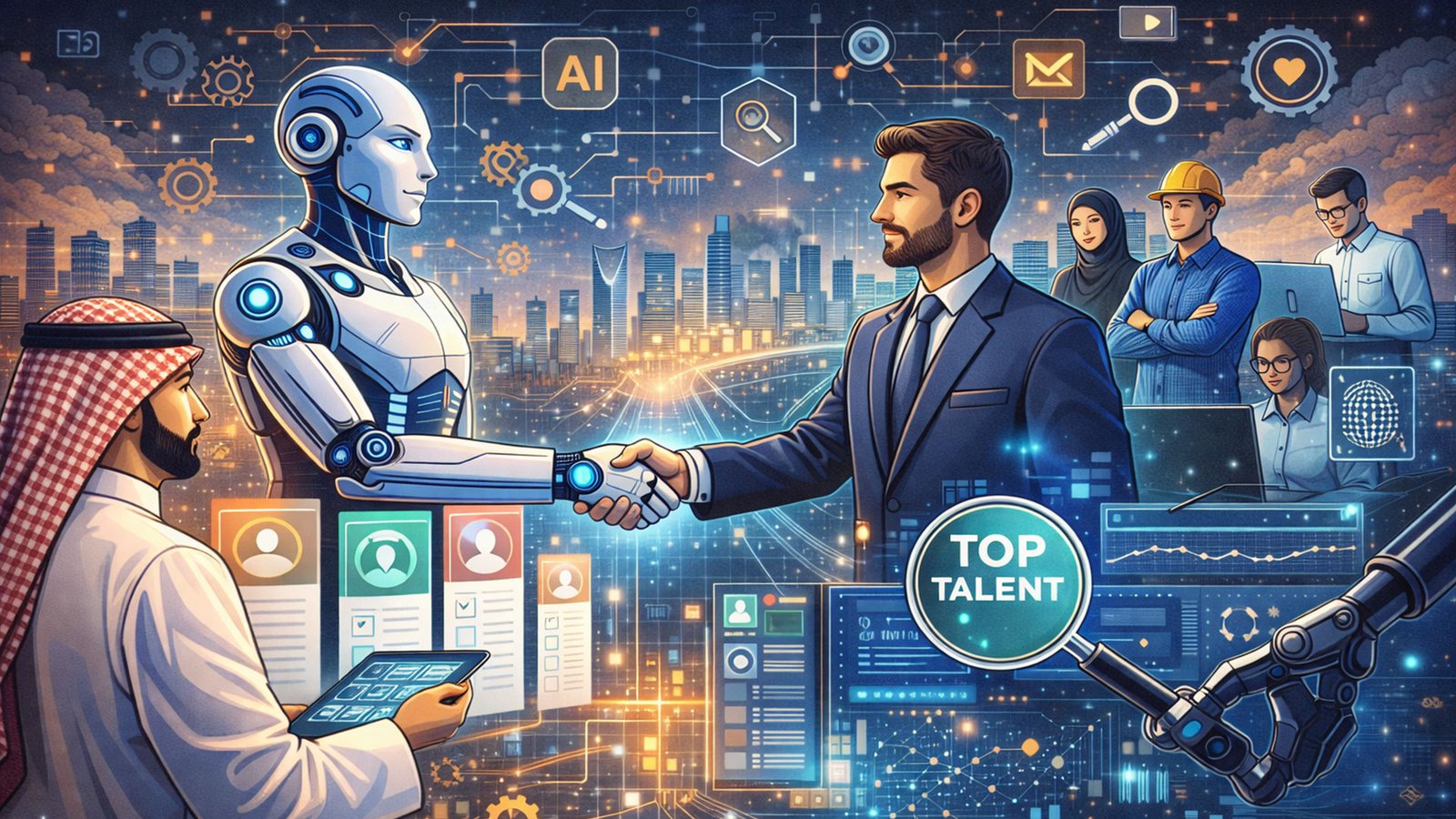
The technology landscape is evolving at a pace that traditional hiring models can no longer sustain. Organizations are under constant pressure to deliver innovation faster, reduce operational costs, and secure highly specialized talent in competitive markets. In this environment, AI-Powered IT Staffing: Transforming Tech Hiring is not just a trend—it is a structural shift in how businesses build and scale technical teams.
Artificial intelligence is redefining how talent is sourced, assessed, deployed, and retained. By combining advanced data analytics, machine learning algorithms, and automation frameworks, companies are building smarter hiring ecosystems that are faster, more accurate, and strategically aligned with business objectives.
The Strategic Shift from Reactive to Predictive Hiring
Traditional IT hiring often begins when a vacancy appears. This reactive model creates delays, productivity gaps, and rushed decisions. AI introduces predictive workforce intelligence.
Through historical data analysis, market demand signals, and skill trend mapping, AI systems forecast future hiring requirements. Instead of scrambling to fill urgent roles, organizations can proactively build talent pipelines aligned with product roadmaps, digital transformation initiatives, and scaling plans.
This predictive capability enables:
- Reduced time-to-hire
- Lower project delays
- Better alignment between technical capabilities and strategic goals
- Improved workforce budgeting accuracy
By turning recruitment data into forward-looking insights, AI shifts hiring from administrative function to strategic advantage.
Intelligent Talent Discovery and Precision Matching
One of the most powerful applications of AI in staffing lies in deep skill analysis and matching accuracy.
Modern AI engines do far more than scan resumes for keywords. They evaluate:
- Technical competencies and certifications
- Project complexity and outcomes
- Tool proficiency and ecosystem familiarity
- Learning velocity and career trajectory patterns
- Behavioral indicators extracted through structured assessments
Natural language processing models interpret contextual meaning rather than simple term frequency. Machine learning systems continuously refine recommendations based on hiring outcomes and employee performance metrics.
This results in significantly improved match quality—reducing early attrition, minimizing onboarding friction, and accelerating productivity.
An experienced IT recruitment agency that integrates AI-driven screening tools can drastically improve candidate relevance while preserving human evaluation for final decision-making.
Automating Operational Bottlenecks in the Hiring Cycle
Recruitment workflows often involve repetitive, manual tasks that consume time and introduce delays. AI-driven automation addresses these inefficiencies without compromising oversight.
Key areas of automation include:
- Resume parsing and ranking
- Candidate communication and scheduling
- Skills assessment administration
- Background verification coordination
- Compliance documentation tracking
Robotic process automation (RPA) and intelligent chat systems streamline early-stage interactions while maintaining consistent candidate engagement. This reduces administrative burden on HR teams and allows recruiters to focus on strategic evaluation, relationship-building, and cultural alignment.
Organizations adopting AI-enabled workflows commonly report substantial reductions in hiring cycle duration and operational costs.
Data-Driven Workforce Optimization Beyond Hiring
AI-powered IT staffing extends beyond candidate selection. It enhances how teams are structured, monitored, and optimized post-placement.
Advanced analytics tools can:
- Monitor skill utilization rates
- Identify emerging capability gaps
- Forecast workload surges
- Recommend upskilling pathways
- Suggest resource reallocation
By integrating hiring data with project performance metrics, businesses gain full visibility into talent ROI. Workforce decisions become evidence-based rather than intuition-driven.
This continuous optimization model ensures that hiring is not a one-time event but part of an adaptive workforce strategy.
Enhancing Candidate Experience Through Personalization
In competitive tech markets, candidate experience is a decisive factor. AI enhances engagement by delivering personalized communication, relevant job recommendations, and transparent application updates.
Intelligent systems tailor outreach messaging based on candidate profiles and career goals. Automated feedback loops reduce uncertainty during the hiring process. Skill assessments adapt in real-time to provide more accurate evaluation without unnecessary testing.
A modern IT recruitment agency leveraging AI can provide faster responses and more meaningful interactions, strengthening employer branding and improving offer acceptance rates.
Balancing Automation with Human Judgment
Despite its capabilities, AI is not a replacement for human expertise. Algorithms cannot fully evaluate emotional intelligence, leadership potential, or subtle cultural alignment factors.
The most effective AI-powered staffing strategies combine:
- Machine-driven data precision
- Recruiter expertise
- Structured interviews
- Behavioral evaluation frameworks
This hybrid approach ensures fairness, mitigates algorithmic bias, and preserves ethical hiring standards. Human oversight remains essential in final decision-making and long-term talent strategy.
Responsible AI governance—including transparent data handling, compliance safeguards, and bias monitoring—is critical for maintaining trust and meeting regulatory standards.
Financial and Operational Impact of AI-Driven Staffing
The measurable business outcomes of AI integration are substantial:
- Lower cost-per-hire through reduced manual effort
- Decreased vacancy downtime
- Faster project execution
- Improved retention due to better role alignment
- Increased recruiter productivity
When hiring decisions are driven by performance analytics rather than assumptions, organizations build more resilient and scalable teams.
In high-growth sectors such as cloud computing, cybersecurity, artificial intelligence development, and enterprise software engineering, AI-enabled staffing models create competitive advantage by accelerating talent acquisition without sacrificing quality.
Future Outlook: Intelligent Talent Ecosystems
The next phase of AI-Powered IT Staffing: Transforming Tech Hiring involves interconnected talent ecosystems.
Emerging developments include:
- AI-driven internal mobility recommendations
- Continuous skill-gap diagnostics
- Real-time labor market intelligence integration
- Hybrid global workforce orchestration
- Behavioral performance forecasting
As technology matures, staffing becomes a dynamic, data-rich function deeply embedded within business strategy. Organizations that adopt intelligent systems early will build adaptable workforces capable of navigating rapid technological change.
Conclusion
AI-Powered IT Staffing: Transforming Tech Hiring represents a fundamental reengineering of recruitment strategy. By integrating predictive analytics, automation, precision matching, and continuous workforce optimization, businesses can move from reactive hiring cycles to proactive talent architecture. The result is faster scaling, stronger alignment with innovation goals, and measurable operational efficiency.
In this evolving landscape, DataSack Solutions delivers AI-powered IT staffing services that combine advanced recruitment technology with deep industry expertise. By leveraging intelligent screening tools, predictive workforce analytics, and structured evaluation frameworks, DataSack Solutions streamlines talent acquisition, reduces hiring timelines, and ensures high-precision candidate matching. With proven experience in managing complex IT staffing requirements, the company empowers businesses to build scalable, future-ready technical teams while maintaining compliance, quality, and strategic alignment.